Research
Cedar vs. OPA for Agent Authorization
A practical comparison of Cedar and Open Policy Agent for capability, resource, and context decisions in AI agent systems.
On this page
- The Short Comparison
- Model an Agent Decision First
- Cedar Approach
- OPA/Rego Approach
- Integration Matters More Than Syntax
- Decision inputs
- Availability and freshness
- Evidence
- Choosing Between Them
- Practical Recommendations
- Keep baseline invariants outside optional policy
- Version the complete decision contract
- Test behavior, not policy formatting
- Security Caveats
- FAQ
- Is Cedar always safer because it is authorization-specific?
- Can OPA store agent grants?
- Does Axec currently require Cedar or OPA?
- Primary References
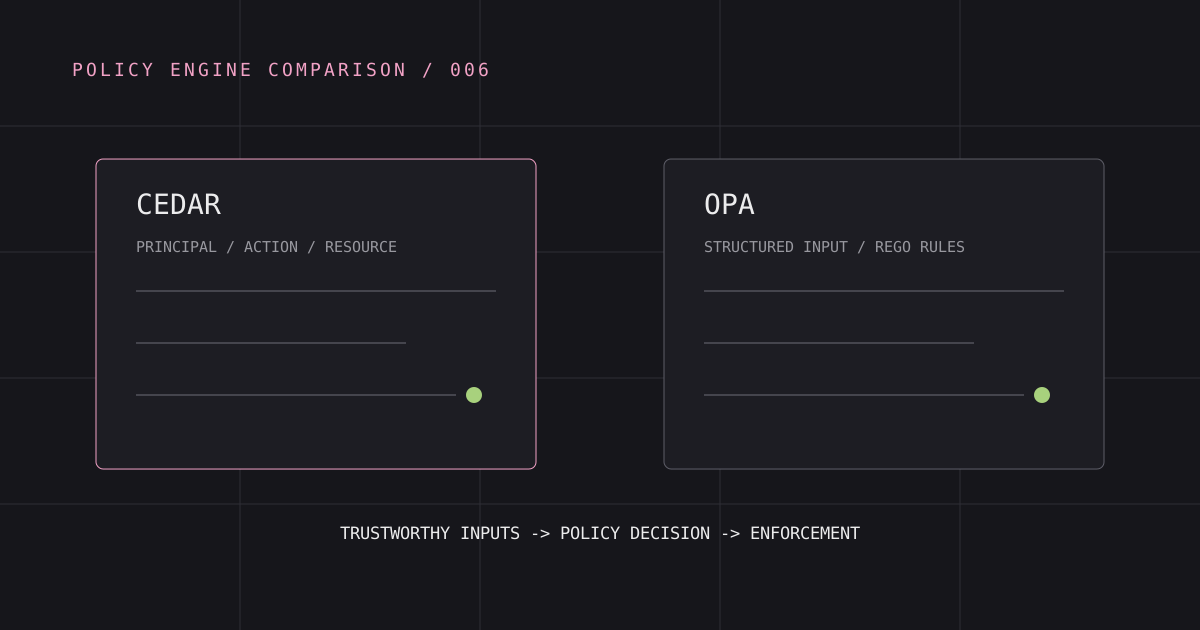
Cedar and Open Policy Agent (OPA) can both evaluate authorization decisions for agent systems, but they begin from different abstractions. Cedar is an authorization policy language centered on principals, actions, resources, entities, and schema. OPA is a general-purpose policy engine whose Rego language evaluates structured data for authorization and many other policy problems.
Neither engine establishes client identity, gathers user consent, stores credentials, or safely executes MCP tools. Those are surrounding system responsibilities. The comparison becomes useful only after the authority inputs are trustworthy.
The Short Comparison
| Dimension | Cedar | OPA/Rego |
|---|---|---|
| Primary model | Authorization decisions | General policy evaluation |
| Core request shape | Principal, action, resource, context | Arbitrary JSON input and data |
| Schema | Native entity/action schema support | Optional conventions and JSON schemas around integration |
| Deny behavior | Explicit forbid policies override permit | Determined by policy structure and defaults |
| Relationship data | Entity graph supplied to evaluator | Data documents or external/built-in integrations |
| Best fit | Typed application authorization | Broad policy platform and heterogeneous controls |
OPA is attractive when one policy service must evaluate varied inputs such as Kubernetes admission, API authorization, configuration, and agent tool constraints.
Model an Agent Decision First
Before choosing syntax, define a stable decision contract. For example:
{ "principal": { "application_id": "app_support_agent", "user_id": "user_123", "principal_kind": "user" }, "action": "ticket.reply", "resource": { "tenant_id": "tenant_acme", "ticket_id": "ticket_456", "classification": "internal" }, "authority": { "grant_id": "grant_789", "connector_id": "con_helpdesk", "capabilities": ["ticket.read", "ticket.reply"] }, "context": { "channel": "mcp", "human_confirmed": false }}All IDs and authority fields must come from authenticated and current backend state, not model-generated arguments. The policy engine may further narrow a valid Grant; it should not manufacture a missing Grant or select an unapproved credential.
Cedar Approach
A simplified Cedar policy could express a permit with a high-impact forbid:
permit (  principal is Application,  action == Action::"ticket.reply",  resource is Ticket)when {  resource.tenant == principal.tenant &&  principal.capabilities.contains("ticket.reply")};
forbid (  principal,  action == Action::"ticket.reply",  resource)when {  resource.classification == "restricted" &&  !context.human_confirmed};
Cedar’s explicit principal/action/resource structure encourages authorization-focused schemas. Forbid-overrides semantics are valuable for guardrails, and validation can detect policies inconsistent with the schema. The integration must still build the entity graph correctly and decide how fresh relationships must be.
OPA/Rego Approach
The same intent in Rego might be:
package agent.authz
default allow := false
allow if {  input.action == "ticket.reply"  input.principal.tenant_id == input.resource.tenant_id  "ticket.reply" in input.authority.capabilities  input.resource.classification != "restricted"}
allow if {  input.action == "ticket.reply"  input.principal.tenant_id == input.resource.tenant_id  "ticket.reply" in input.authority.capabilities  input.resource.classification == "restricted"  input.context.human_confirmed}
Rego offers broad expressiveness over nested data and a mature ecosystem for bundles, sidecars, and distributed decisions. That flexibility also makes policy conventions important. Teams need disciplined package structure, default-deny rules, input schemas, and review guidance to avoid inconsistent authorization styles.
Integration Matters More Than Syntax
Decision inputs
Axec currently uses a fixed authority evaluator rather than persisting a named Cedar or OPA policy. Its runtime reloads the Application, credential, Grant, attachment, Connector, and selected Connection or Vaulted Credential. A future policy integration should consume that validated projection and return a narrowing decision with a reason and evaluator version.
Workspace groups in Axec are currently read-only directory facts and do not grant Application, OAuth, or MCP authority. Feeding them into Cedar or OPA would require an explicit policy-governance contract, lifecycle rules, and freshness semantics; merely having group data does not activate group authorization.
Availability and freshness
Decide whether evaluation is embedded, sidecar, or remote. A remote policy service adds a network dependency to every tool call. Caching improves availability but can delay revocation. Define fail-closed behavior, bundle versioning, maximum staleness, and rollback before rollout.
Evidence
Record policy version or bundle digest, normalized input identifiers, decision, and reason. Do not log upstream tokens or unrestricted model arguments. Keep the policy decision distinct from the later upstream outcome.
Choosing Between Them
Choose Cedar when your central problem is application authorization, typed entities and relationships fit naturally, and explicit forbid semantics improve reviewability. Choose OPA when you already operate it, need one general policy substrate across several domains, or need flexible evaluation over heterogeneous JSON.
Practical Recommendations
Keep baseline invariants outside optional policy
Tenant isolation, valid token audience, active credential status, exact Grant bindings, and inability of Application principals to use user Connections should remain hard runtime invariants. Policy can narrow authority, not bypass foundational checks.
Version the complete decision contract
Version input schema, policy, entity/data snapshot semantics, and decision reason codes together. Reject unknown fields where ambiguity could widen access.
Test behavior, not policy formatting
Build cases for cross-tenant access, revoked Grants, missing capabilities, changed contracts, stale groups, human-confirmed high-impact actions, and default deny. Include mutation tests that remove one required condition.
Security Caveats
Policy engines evaluate the facts supplied to them. Spoofed principal fields, stale relationship data, or unchecked tool arguments produce confidently wrong decisions. Avoid letting the agent propose authoritative labels such as classification: public.
Highly expressive policies can also hide accidental privilege unions. Keep the final capability intersection visible and bounded by administrator attachment and user consent before optional contextual policy runs.
FAQ
Is Cedar always safer because it is authorization-specific?
No. Its model can improve clarity, but incorrect entities, schemas, or integration logic remain security failures.
Can OPA store agent grants?
OPA can receive policy data, but the system of record should own Grant lifecycle, credential bindings, consent evidence, and revocation. Avoid turning policy bundles into a shadow credential-governance database.
Does Axec currently require Cedar or OPA?
No. Axec currently enforces fixed authority invariants and does not attribute decisions to a named policy.
Primary References
From architecture to enforcement
Secure your AI agents with Axec
Keep application identity, user-approved authority, upstream credentials, and runtime enforcement separate as agents access enterprise systems.
Continue exploring
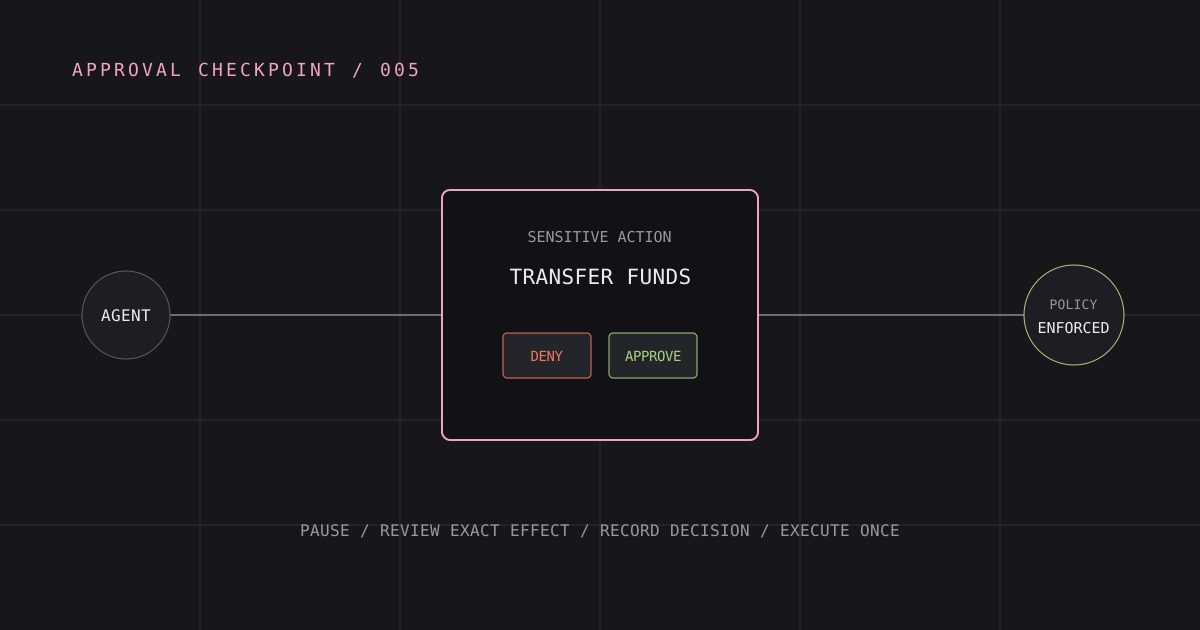
Human-in-the-Loop Authorization for AI Agents
Design meaningful human approval for agent authority changes and high-impact actions without creating approval fatigue.
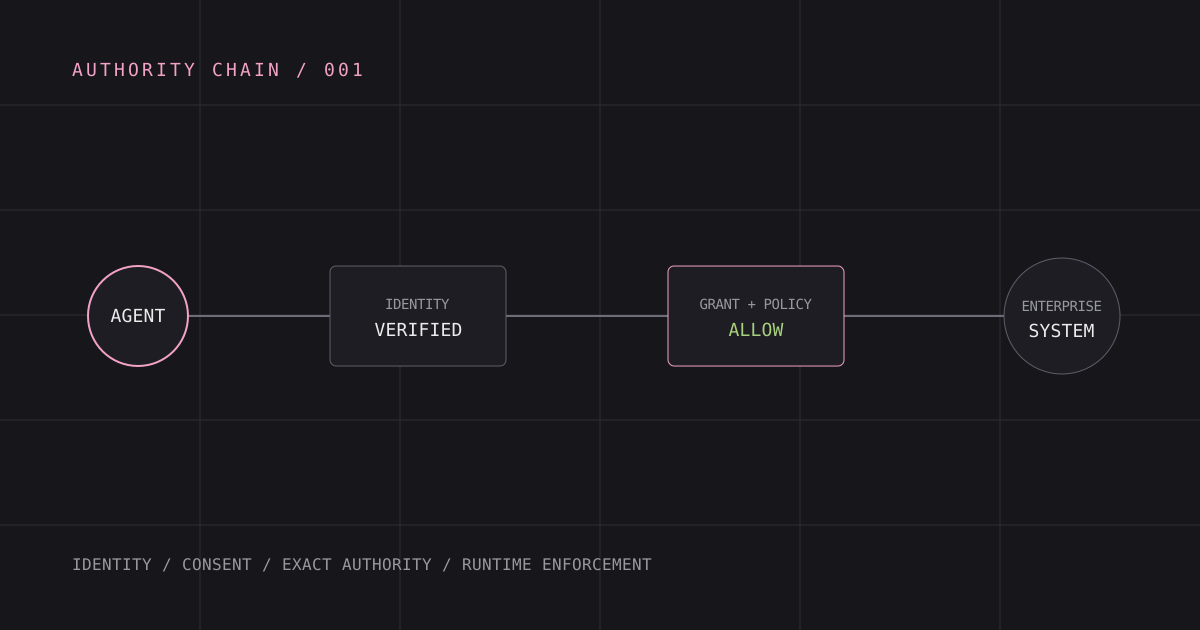
AI Agent Authorization: A Practical Architecture
How to authorize AI agents with explicit application identity, user consent, bounded credentials, and runtime enforcement.
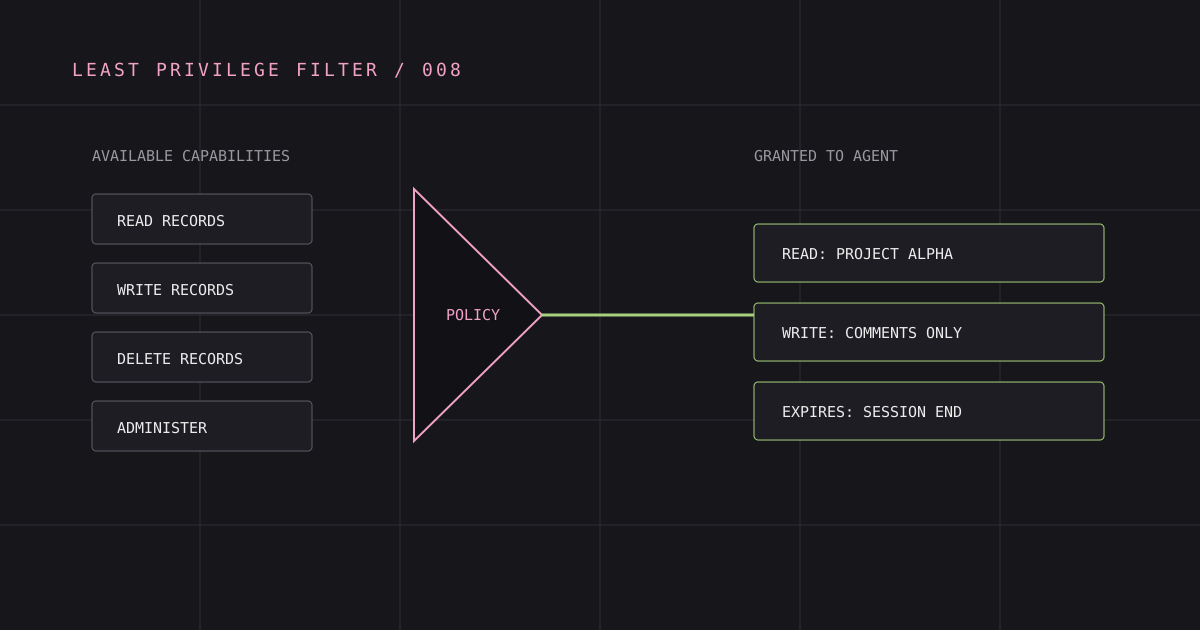
How to Prevent Over-Permissioned AI Agents
Reduce agent authority with capability ceilings, specific consent, credential isolation, live checks, and measurable revocation.