Move agents into production with confidence.
Give security and platform teams an explicit model for agent identity, delegated authority, credentials, and runtime enforcement.
Axec product / Core capabilities
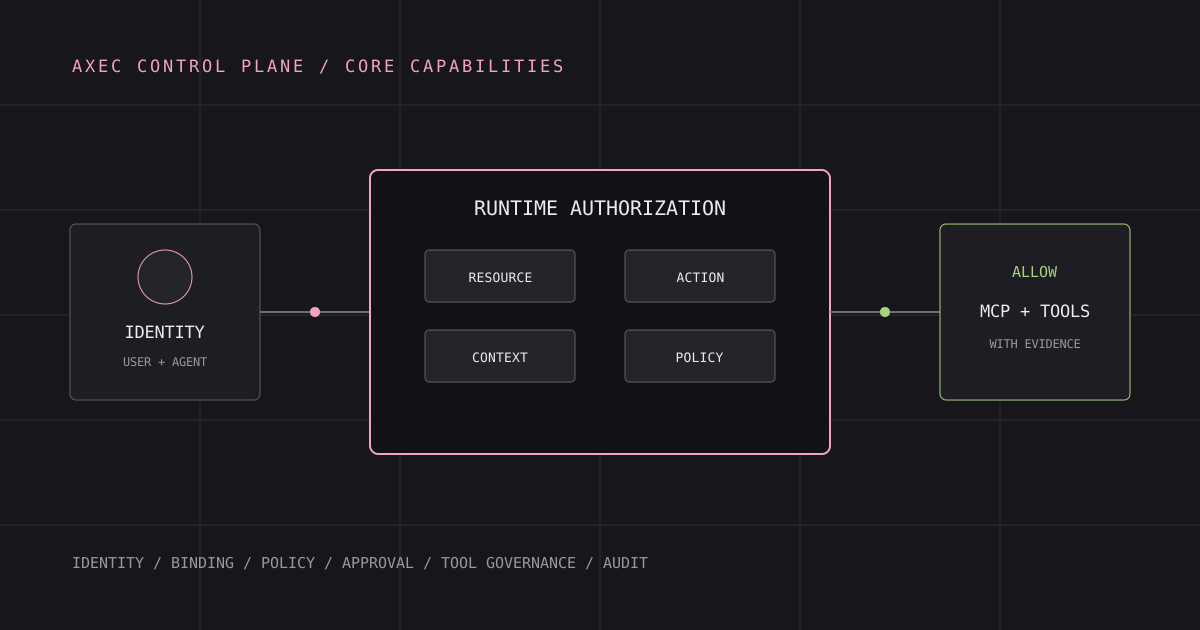
Give every agent an accountable identity, preserve who it represents, authorize sensitive actions at runtime, and keep enterprise tools and credentials behind one governed boundary.
Why Axec
Give security and platform teams an explicit model for agent identity, delegated authority, credentials, and runtime enforcement.
Connect new agents and enterprise systems without distributing more credentials or rebuilding authorization for every integration.
Connect the requesting agent, represented user, approved authority, runtime decision, and provider outcome in one evidence trail.
How Axec works
Product capabilities
01 / Agent authorization
02 / Enterprise integrations
03 / Credential governance
04 / Policy enforcement
05 / Security evidence
Common questions
No. Axec integrates with major identity providers, including Okta and Microsoft Entra ID, so you can keep your existing identity infrastructure. It adds the application identity, delegated grants, connection context, and runtime authorization needed when AI agents act on a user's behalf.
Yes. Axec governs remote MCP servers and API-backed capabilities through the same authorization boundary, so policy and evidence remain consistent across both kinds of integration.
Provider credentials remain behind Axec and are selected only after an action is authorized. They are not exposed to the model, copied into prompts, or returned to the agent runtime.
You decide through policy. Routine actions can run automatically, while irreversible, privileged, or unusually consequential actions can pause for approval of that exact request.
Build on a governed authority path