Identity & Authorization
Why AI Agents Need Identity
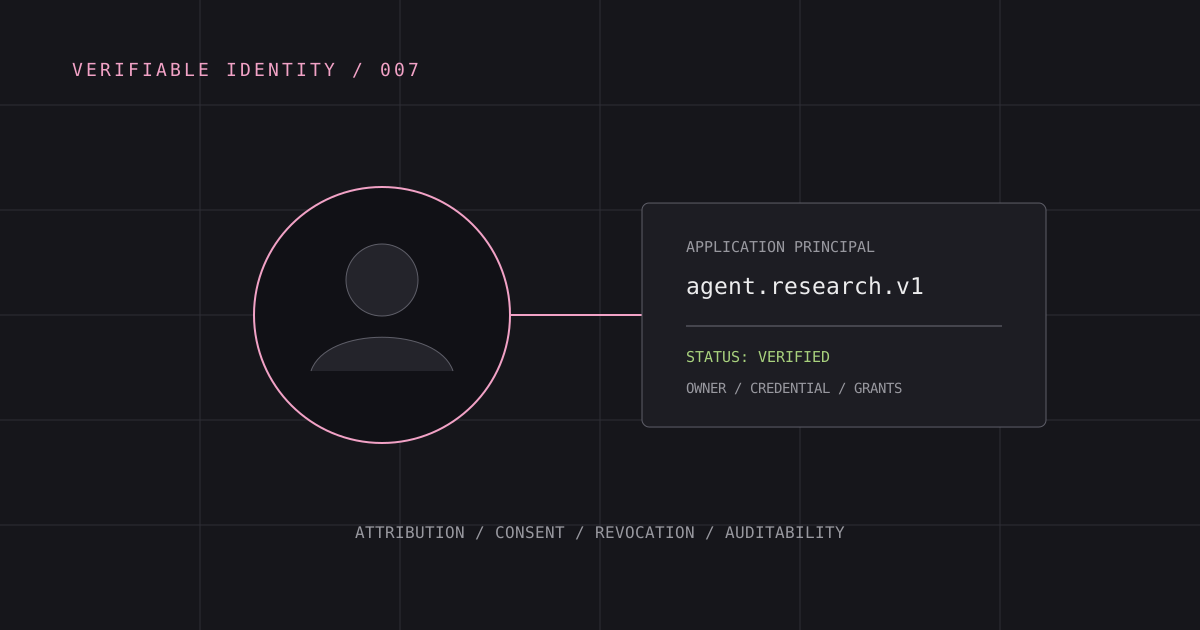
Identity gives agent actions attribution, credential boundaries, revocation, and a foundation for meaningful authorization.
On this page
- Identity Enables Four Controls
- Attribution
- Authorization
- Credential isolation
- Revocation
- Identity Is Not Permission
- Choose a Stable Identity Boundary
- A Concrete Admission Pattern
- Practical Recommendations
- Eliminate shared agent keys
- Carry identity through every hop
- Keep evidence secret-free
- Review dormant identities
- Security Caveats
- FAQ
- Does every sub-agent need its own Application?
- Is the user the agent’s identity?
- Is an API key an identity?
- Primary References
An AI agent needs identity for the same reason any active software needs identity: a security system must know which principal is requesting authority. Natural-language purpose, model name, browser session, and network origin are useful context, but none is a stable substitute for authenticating the client Application.
Without identity, authorization collapses into possession. Any process that finds a shared token can call the same tools, and logs can say only that “something” acted. Explicit identity creates a point where administrators can scope access, users can consent, credentials can be selected, and incidents can be contained.
Identity Enables Four Controls
Attribution
A tool decision should identify the Application and exact credential generation that authenticated it. This makes it possible to distinguish two agents operated by the same user or two deployments calling the same gateway. Model-generated “agent names” are not attribution because the caller can change them.
Authorization
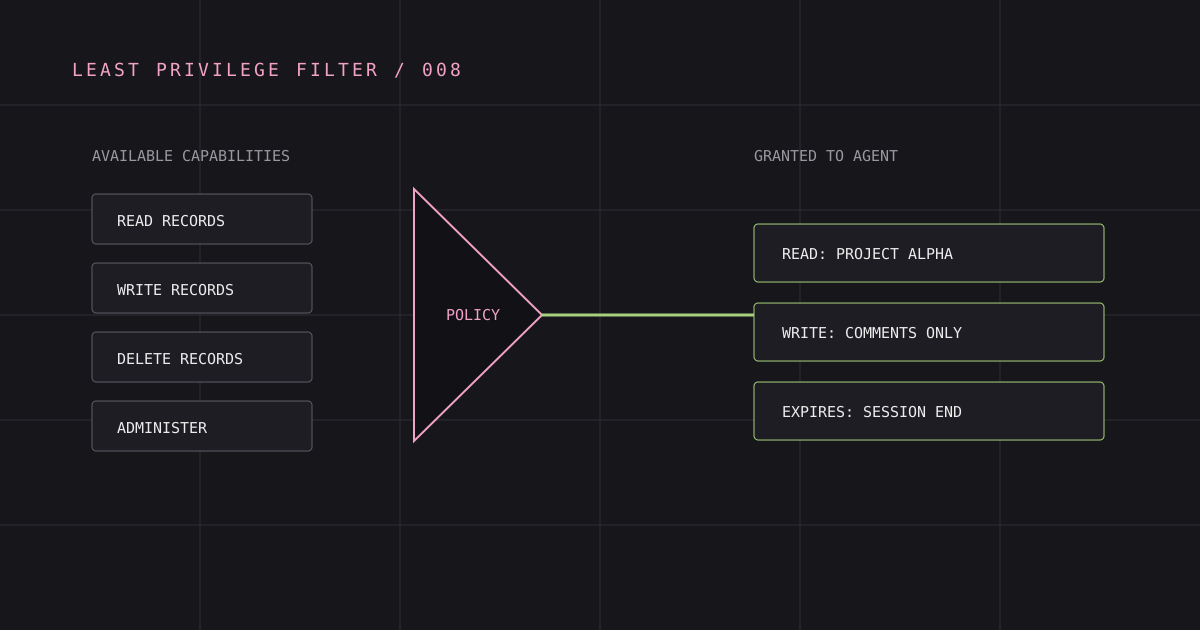
Permission attaches to a principal. In Axec, an administrator attaches selected Connectors to an Application’s MCP gateway, establishing an authority ceiling. A user’s Grant can narrow that ceiling to exact capabilities and a credential source. An unidentified caller cannot participate safely in this chain.
Credential isolation
The Application’s credential proves client identity to Axec. It is separate from a user’s upstream Connection and from a workspace Vaulted Credential. The Application can invoke approved capabilities without automatically possessing the selected upstream secret.
Revocation
Identity gives responders a bounded object to revoke. Disabling one Application or revoking one Application Credential should stop that client without rotating every user’s provider token or disrupting unrelated agents.
Identity Is Not Permission
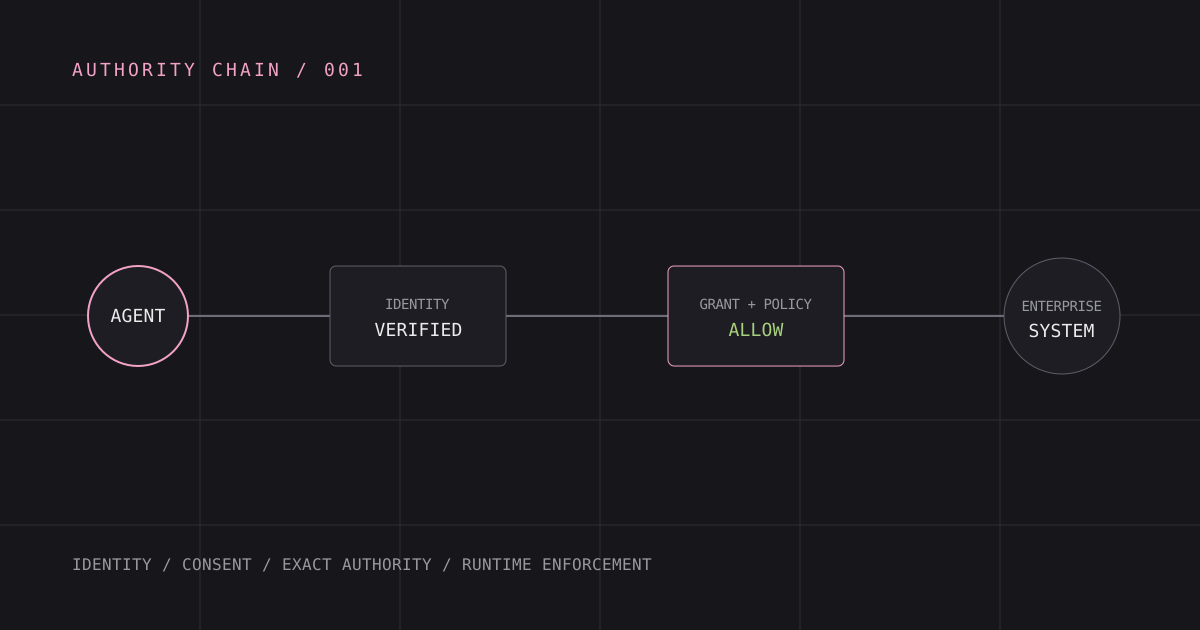
Authentication answers “which Application is calling?” Authorization answers “may it perform this action under current authority?” Keep the records separate:
Application identity + active Application Credential + target MCP gateway + administrator Connector attachment + user Grant (for delegated access) + exact Connection or Vaulted Credential + current capability contract = effective runtime authorityNo single line implies the others. Dynamic Client Registration, for example, can establish a public PKCE client identity. It does not create a gateway, attach a Connector, connect a user’s account, or grant resource authority.
Similarly, user authentication is not Application authentication. A user may be logged into a browser, but the OAuth request still needs an identifiable client and exact target resource. Conversely, a confidential Application using client_credentials has no user delegation merely because a user originally configured it.
Choose a Stable Identity Boundary
Use one Application identity when components share ownership and intended authority. Create separate Applications when they require independent consent, Connector attachments, revocation, or evidence. For example, a support assistant and a production remediation agent should not share identity merely because they use the same model provider.
An identity inventory should include:
| Field | Why it matters |
|---|---|
| Owner | Accountability and incident contact |
| Purpose | Review context, not a permission by itself |
| Authentication method | Credential issuance and rotation |
| Gateway resource | Audience boundary |
| Attached Connectors | Administrator authority ceiling |
| Principal mode | User-delegated or Application-principal |
| Status | Immediate disablement |
A Concrete Admission Pattern
For a public interactive agent, use Authorization Code with S256 PKCE and an exact MCP resource. The resulting Grant should bind the Application Credential used during authorization. Code redemption must verify the same client, redirect URI, verifier, resource, one-use code, and live Grant.
For a static autonomous Application, use confidential client authentication and client_credentials only when the upstream authority is workspace-owned or needs no credential. Axec limits this path to the Application’s own gateway and eligible vaulted or no-auth attachments. It cannot use a user’s Connection.
At MCP runtime, validate more than the token signature. Axec reloads current Application, credential, gateway, Grant, attachment, Connector, and credential-source state for every request. This allows revocation and contract changes to take effect before bearer expiry.
Practical Recommendations
Eliminate shared agent keys
Issue credentials per Application boundary, retain safe fingerprints and lifecycle history, and overlap generations only when rotation requires it. Never put the same long-lived secret into unrelated agents.
Carry identity through every hop
If an orchestrator delegates to a worker, preserve the original Application and user Grant context. Do not replace them with an unverified X-Agent-Name header. Downscope worker authority when possible.
Keep evidence secret-free
Record identity, Grant, capability, decision, and correlated outcome. Exclude access tokens, authorization headers, API keys, complete prompt content, and decrypted upstream responses unless a separate data-governance policy explicitly requires them.
Review dormant identities
Disable Applications and credentials that no longer have an owner or workload. Expired registrations and old credential generations should not remain valid merely because no one noticed them.
Security Caveats
Identity does not make an agent trustworthy. A correctly authenticated Application can be compromised, manipulated by prompt injection, or invoke a dangerous tool within its authority. Combine identity with least privilege, validated arguments, live authorization, and action confirmation for consequential operations.
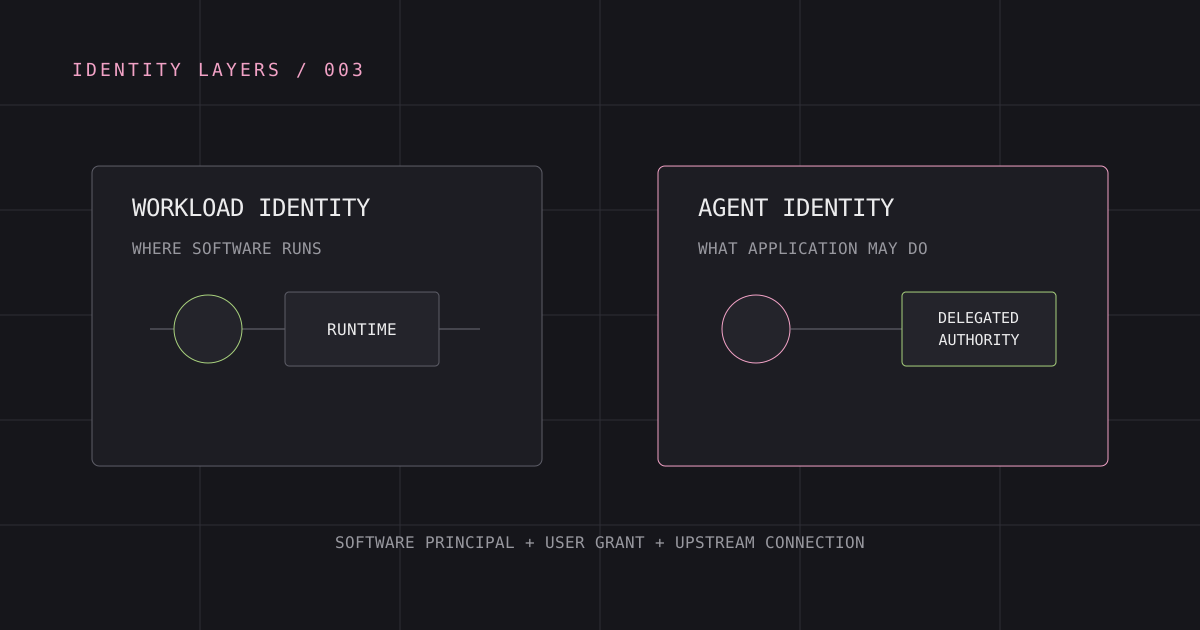
Do not overstate runtime identity support. Cloud workload identities and attestations are valuable, but they must be deliberately integrated with the authorization boundary. Axec currently authenticates supported Application credentials; it does not automatically accept every orchestrator or cloud identity token.
FAQ
Does every sub-agent need its own Application?
Only when it needs an independently managed authority and lifecycle. Otherwise, preserve the parent Application identity and issue narrower task authority.
Is the user the agent’s identity?
No. The user and Application are separate principals. Delegated authorization binds them without conflating them.
Is an API key an identity?
It can authenticate a software principal if uniquely issued, protected, rotated, and mapped to lifecycle state. A shared key embedded across agents provides weak attribution and revocation.
Primary References
From architecture to enforcement
Secure your AI agents with Axec
Keep application identity, user-approved authority, upstream credentials, and runtime enforcement separate as agents access enterprise systems.
Continue exploring
Agent Identity vs. Workload Identity
How agent identity relates to workload identity, user delegation, credentials, and authorization boundaries.
AI Agent Authorization: A Practical Architecture
How to authorize AI agents with explicit application identity, user consent, bounded credentials, and runtime enforcement.
How to Prevent Over-Permissioned AI Agents
Reduce agent authority with capability ceilings, specific consent, credential isolation, live checks, and measurable revocation.